
 01
Tag it.
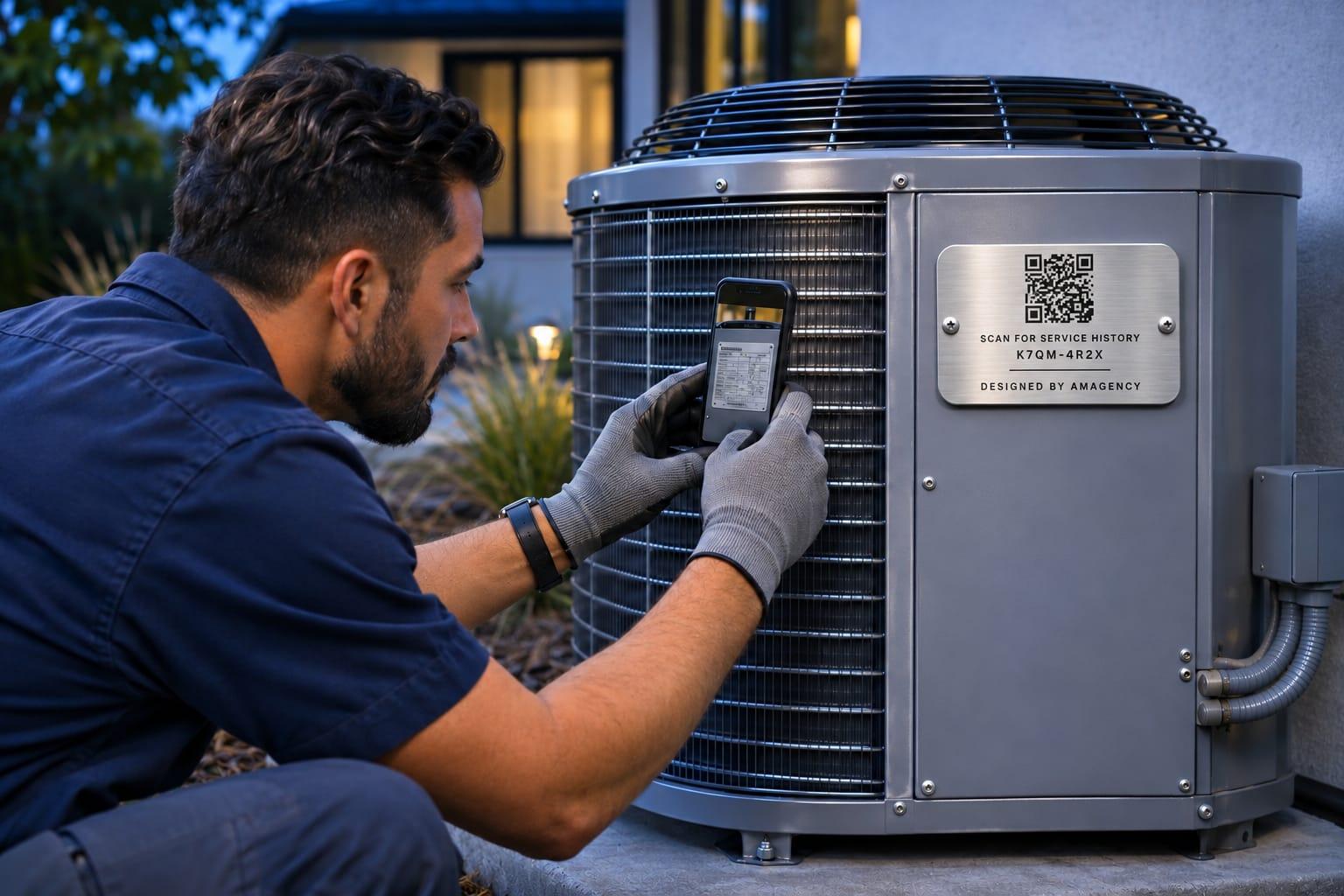
The tech screws a blank tag to the unit, scans it, and photographs the data plate. AI fills in the make, model, serial number, and refrigerant.
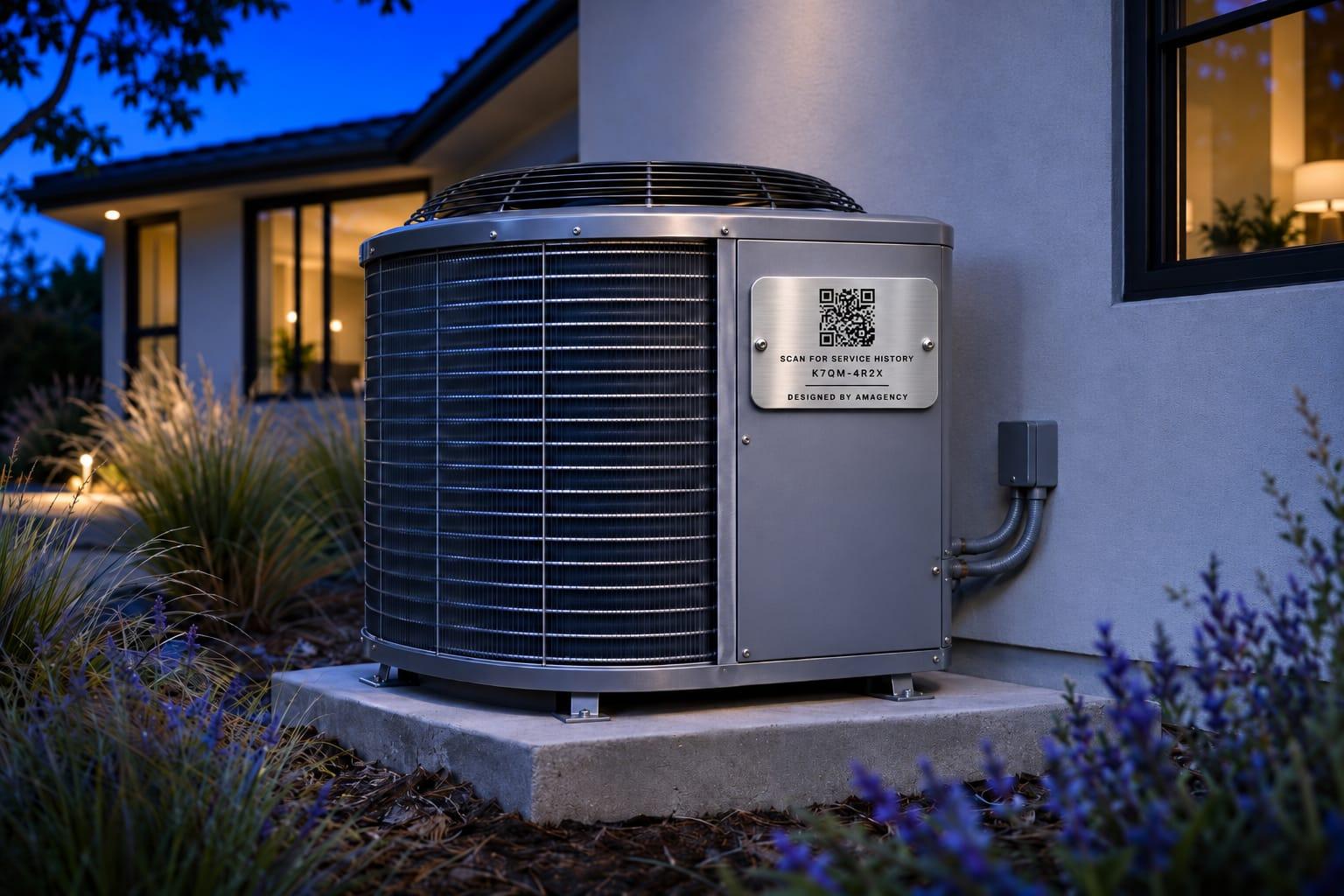
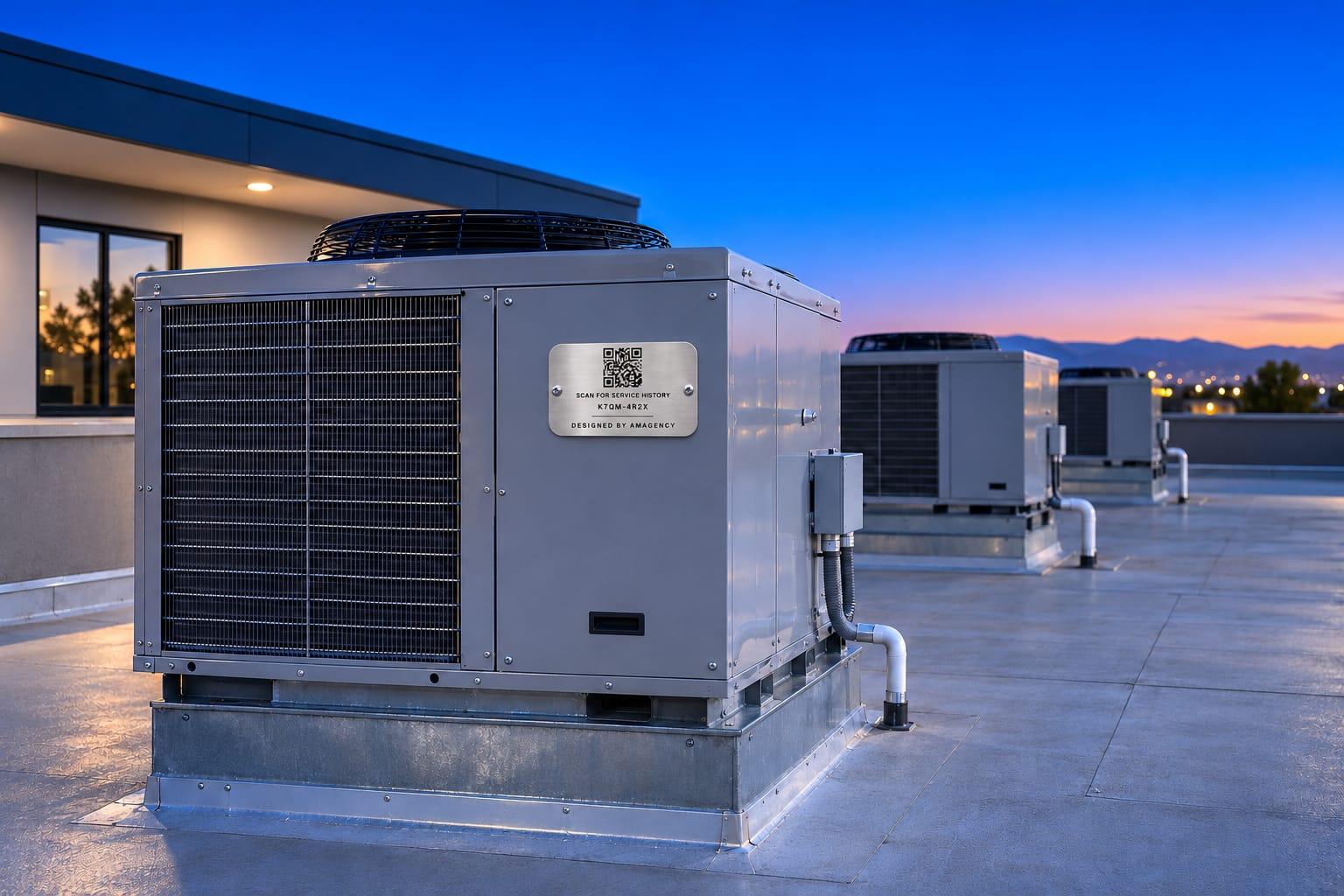
A metal QR tag on each system. Your techs log every visit in about a minute just by talking, and every homeowner who scans it sees your work and calls you, not whoever shows up on Google.
New problem report
Not cooling · Maple Court
You did the install and every tune-up since. Then the AC quits on the hottest day of the year, and the call goes to someone else.
Sun and rain wear the service sticker off the unit, and your phone number goes with it.
When the AC quits in July, they search “AC repair near me” and call whoever shows up first.
Past readings, parts, and warranty dates are scattered across invoices, so every visit starts from zero.
01The tech screws a blank tag to the unit, scans it, and photographs the data plate. AI fills in the make, model, serial number, and refrigerant.
 02
After the work, the tech talks for a minute. AI writes the report: work done, parts, readings, problems found, and the next service date. The tech checks it and taps Approve.
 03
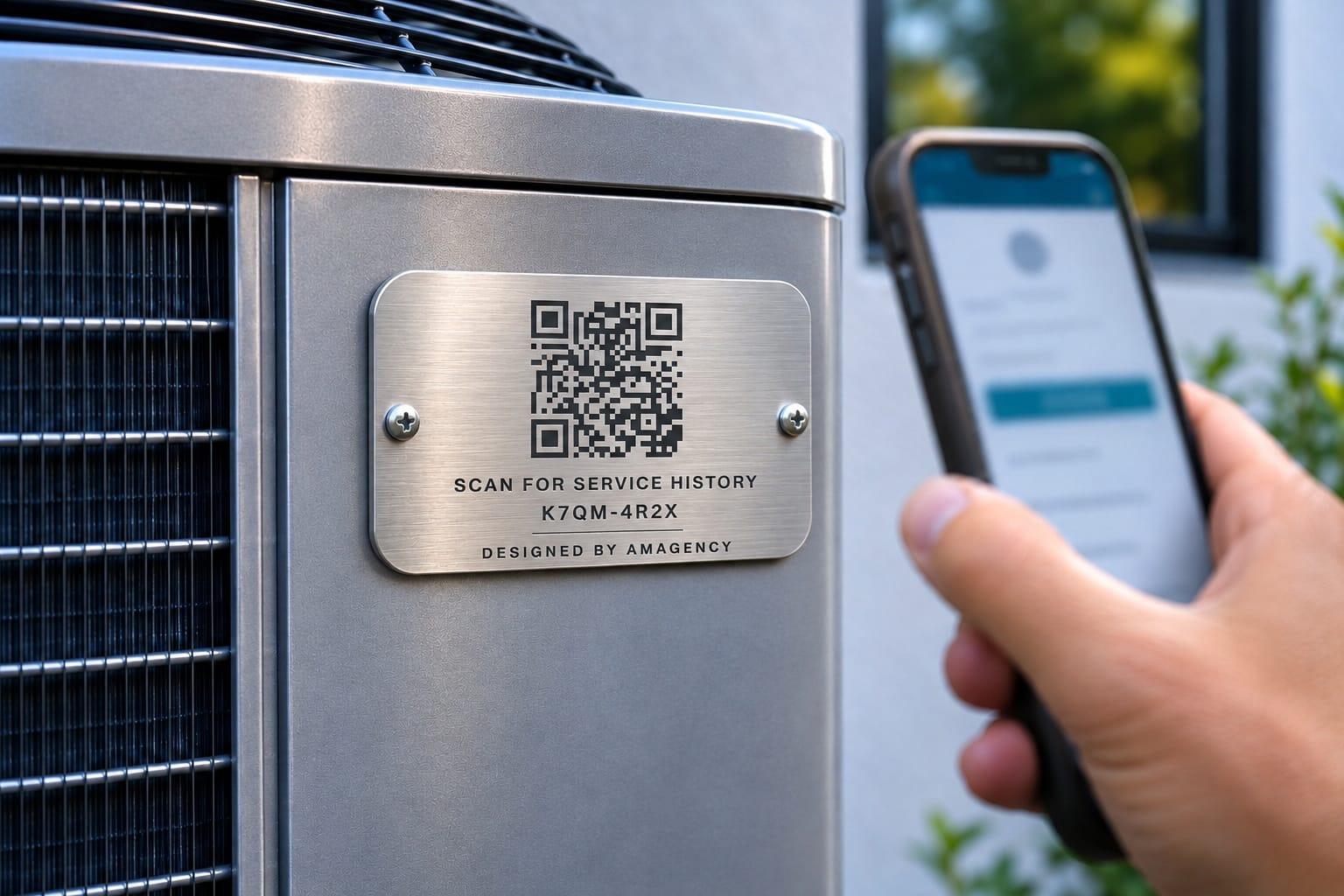
Anyone who scans sees your name, the service history, and one-tap buttons to call you or report a problem, sent straight to your office.
Techs talk the way they already do. AI sorts it into the same clean report every time, with readings and a plain-English summary, and nothing saves until the tech approves it.
Crestview · Tech
Fall tune-up
Ready
What the tech said
Service report
AirCore 3 ton AC · Nov 4, 2026
For the homeowner
Your AC got its fall tune-up. We cleaned the outdoor coil, tightened the electrical connections, and replaced the air filter. Everything tested normal. One part, the contactor, is starting to wear, so we’ll plan to replace it at your spring visit.
Work done
Parts used
Air filter, 16 × 25 × 1
Refrigerant
None added
Problems found
Contactor is pitted and starting to wear
Next service
Spring tune-up, April 2027
Readings
Suction
118 psi
Head
310 psi
Superheat
11 °F
Subcool
9 °F
Supply air
55 °F
Return air
75 °F
Demo: plays a sample voice note. Nothing is recorded.
The tag works for you twice: it brings the next call back to your shop, and it’s a service your customers will pay for.

Hold your customers
Your number lives on the unit
A metal tag outlasts the sticker by decades. Every scan opens your name, your phone, and a Request service button.
Problem reports come to you
When something stops working, the homeowner reports it from the unit. It lands in your queue, not in a search for your competitor.
The history keeps them
The company that holds a system’s records is the easy call. Owners get a private link to every visit you’ve made.
You know who’s due
Every unit knows its next service date, so the office can send reminders before the season starts.
Charge for it
Homeowners already pay for peace of mind. A permanent, readable record of their system is something you can price on its own or fold into your plans. You set the prices.
Equipment record fee
Example: $49 per systemCharge a one-time fee per system for the tag and its lifetime record, at install or the next tune-up.
Maintenance plan perk
Example: +$3 a month per memberMake the digital record part of your plan. It’s a visible reason the plan is worth renewing every year.
Landlords and property managers
Example: $5 a month per doorOwners with many units need proof of maintenance. Sell it per door, with one link for the whole property.
Move the sliders to your own numbers. The total counts record fees, plan add-ons, and the repair calls that come back to you because your name is on the unit.
A year with Unit Tags
$38,160
from 360 tagged systems, your plan, and repeat repairs
What’s left for your shop
$29,688
About 4.5× what it costs, with these numbers.
Example numbers. Every input is yours to change; you set your own prices.

The tag is as useful to the people who live with the system as it is to your shop. That’s why they keep scanning it, and why they keep calling you.
The whole history, in plain English
Every visit, reading, part, and photo, with a short summary written for the homeowner, not the technician.
Help from the unit itself
Call or report a problem in one tap, any time. The report reaches the company that knows this system.
Proof for warranty claims
Dated records signed by a named tech show the system was maintained.
A clean record when they sell
A shareable maintenance history is one more thing buyers like to see.
Safety comes first
Choosing a gas or burning smell shows what to do right away: leave the building and call 911 or the gas company.
The same scan shows each person what they need. Open any of them; everything works, with sample data.
The public can look and report a problem. Only verified people from your company can add to the history, and nothing they add can be quietly changed.
AMAGENCY checks each HVAC company’s contractor license before it goes live.
Only people your admin invites can add a record. They sign in with a code, then Face ID.
Remove a tech and their phone loses access at once.
Each record saves the time, the tech’s name, and where the phone was.
A fix saves a new version and keeps the old one. Nothing disappears.
The public page never shows a name, an address, gate codes, or photos from inside the home.
Scan for service history
K7QM-4R2X
Designed by AMAGENCY
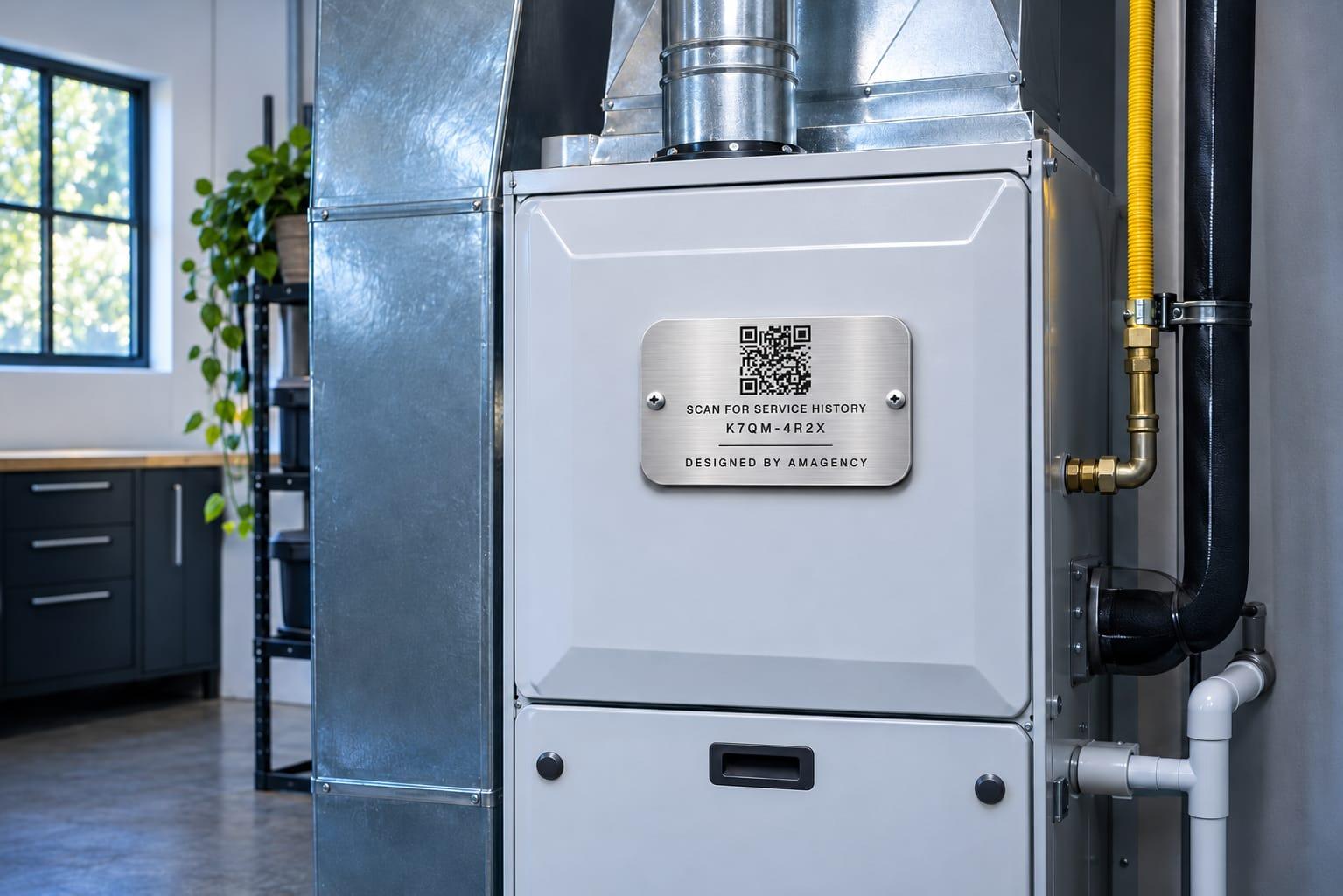
Your logo and phone number, laser-engraved into the metal with the QR code. It goes on outdoor units, furnaces, air handlers, heat pumps, mini-splits, and rooftop units.
AMAGENCY Unit Tags
$256a month
Per company, not per person. Tags are sold separately in packs of 25.
No. It runs in the phone’s browser and can be saved to the home screen. Techs sign in once with a code, then Face ID.
Book a demo and we’ll walk through it with your systems, your prices, and your team.
Scan for service history
K7QM-4R2X
Designed by AMAGENCY